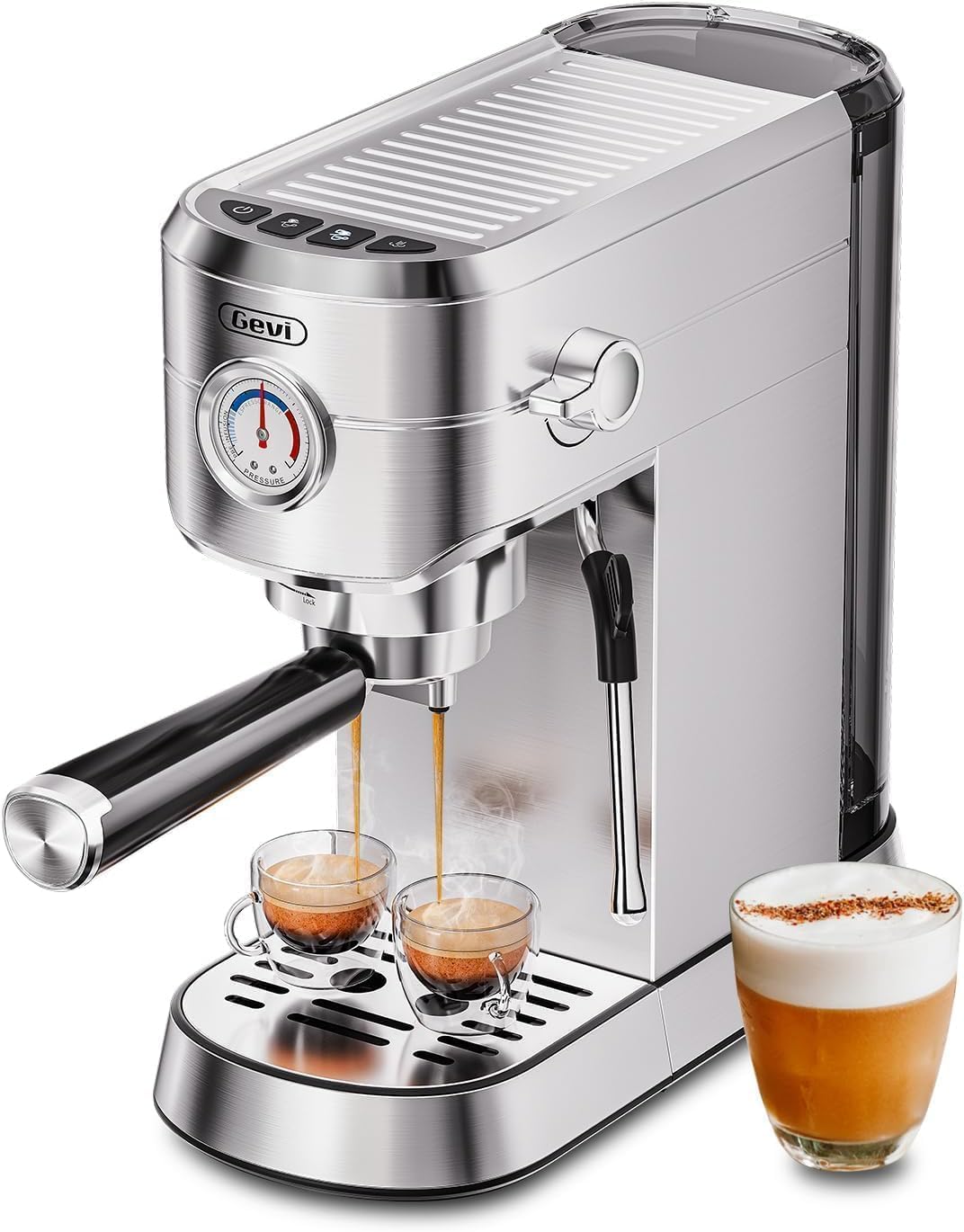
Breville Barista Express BES870XL
Our strongest starting point because its semi-automatic design represents a useful machine type to compare against the workflow and utility requirements above.
Water treatment should be selected from a water test, not from a generic “espresso filter” recommendation. Hardness, alkalinity, chloride and total dissolved solids affect scale, corrosion and taste in different ways.
Removing too little hardness can coat heaters with scale; aggressive demineralization can produce corrosive water. Espresso-machine manufacturers publish acceptable chemistry ranges for a reason.
Municipal water can vary seasonally and buildings may have softeners. Measure the actual tap feeding the machine, then size cartridges for gallons used between changes.
For “What Water Filtration Does a Commercial Espresso Machine Need?,” these three models give you concrete products to compare against the requirements above, instead of leaving the answer at theory.

Our strongest starting point because its semi-automatic design represents a useful machine type to compare against the workflow and utility requirements above.

A useful second comparison because its steam capability represents a different workflow to compare against the requirements above.

A contrasting third option because its fast-heating semi-automatic design differs from the other options above.