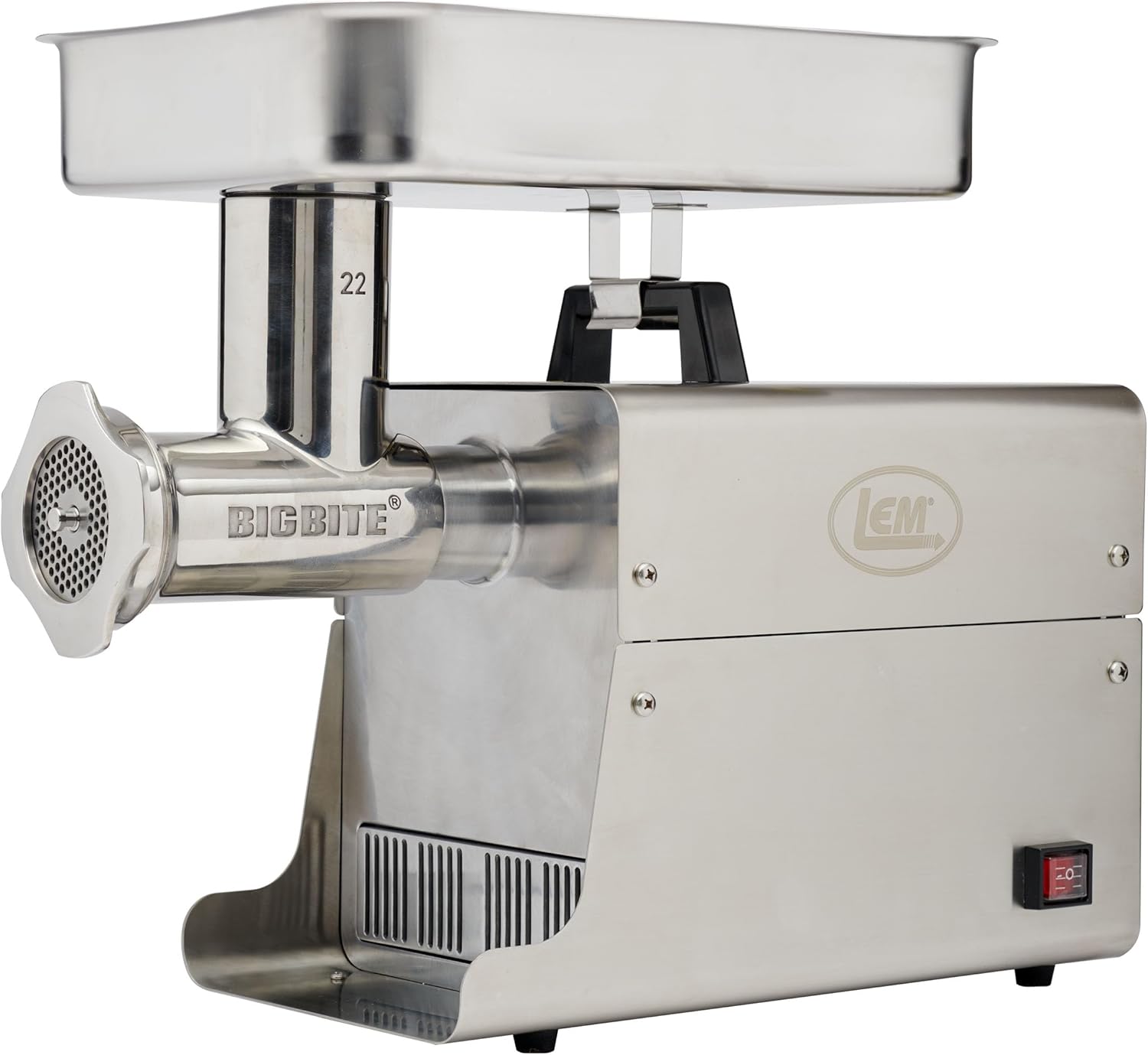
Weston Pro Series #22
Our strongest starting point because its rated around 14 lb/min puts it in a different duty class from lighter alternatives, which is exactly what this question is trying to separate.
“Continuous duty” generally means the grinder is designed for sustained commercial operation rather than a short consumer run followed by a cool-down. It still does not mean unlimited operation under any load; the manufacturer’s duty and thermal guidance controls.
A machine that grinds quickly but overheats halfway through the morning batch can become the bottleneck. Busy processors should prioritize models designed for repeated or sustained use, with adequate cooling and robust gearing.
Look for explicit duty-cycle language, thermal protection, commercial warranty terms and user-accessible cleaning. If the seller only lists horsepower and no operational guidance, do not infer continuous duty.
For “What Does Continuous Duty Mean for a Commercial Meat Grinder?,” these three models give you concrete products to compare against the requirements above, instead of leaving the answer at theory.

Our strongest starting point because its rated around 14 lb/min puts it in a different duty class from lighter alternatives, which is exactly what this question is trying to separate.

A useful second comparison because its rated around 17 lb/min puts it in a different duty class from lighter alternatives, which is exactly what this question is trying to separate.

A contrasting third option because its rated around 13 lb/min puts it in a different duty class from lighter alternatives, which is exactly what this question is trying to separate.