
BEST PROFESSIONAL
LEM BigBite #32
Our strongest starting point because 1.5 HP • #32 head and Rated around 17 lb/min give the buyer two concrete traits to verify against this requirement.
1.5 HP • #32 headRated around 17 lb/min
Check →
Horsepower tells you something about motor capacity, but pounds per minute is closer to the production question a butcher or kitchen actually has. Head size, auger geometry, meat temperature, plate size and duty cycle can make two grinders with similar horsepower perform very differently.
Start with how many pounds must be ground during the busiest prep window. If 200 pounds has to be finished in 20 minutes, the target is very different from a restaurant grinding 30 pounds before service. Rated throughput should be treated as a comparison point rather than a guaranteed number.
More motor capacity can help a grinder hold speed under tougher loads and larger plates, but it does not replace good feeding and sharp knife/plate sets. Compare horsepower together with #12/#22/#32 head size and the manufacturer’s stated production rate.
For “Meat Grinder Horsepower vs. Throughput: What Actually Matters?,” these three models give you concrete products to compare against the requirements above, instead of leaving the answer at theory.
Our strongest starting point because 1.5 HP • #32 head and Rated around 17 lb/min give the buyer two concrete traits to verify against this requirement.
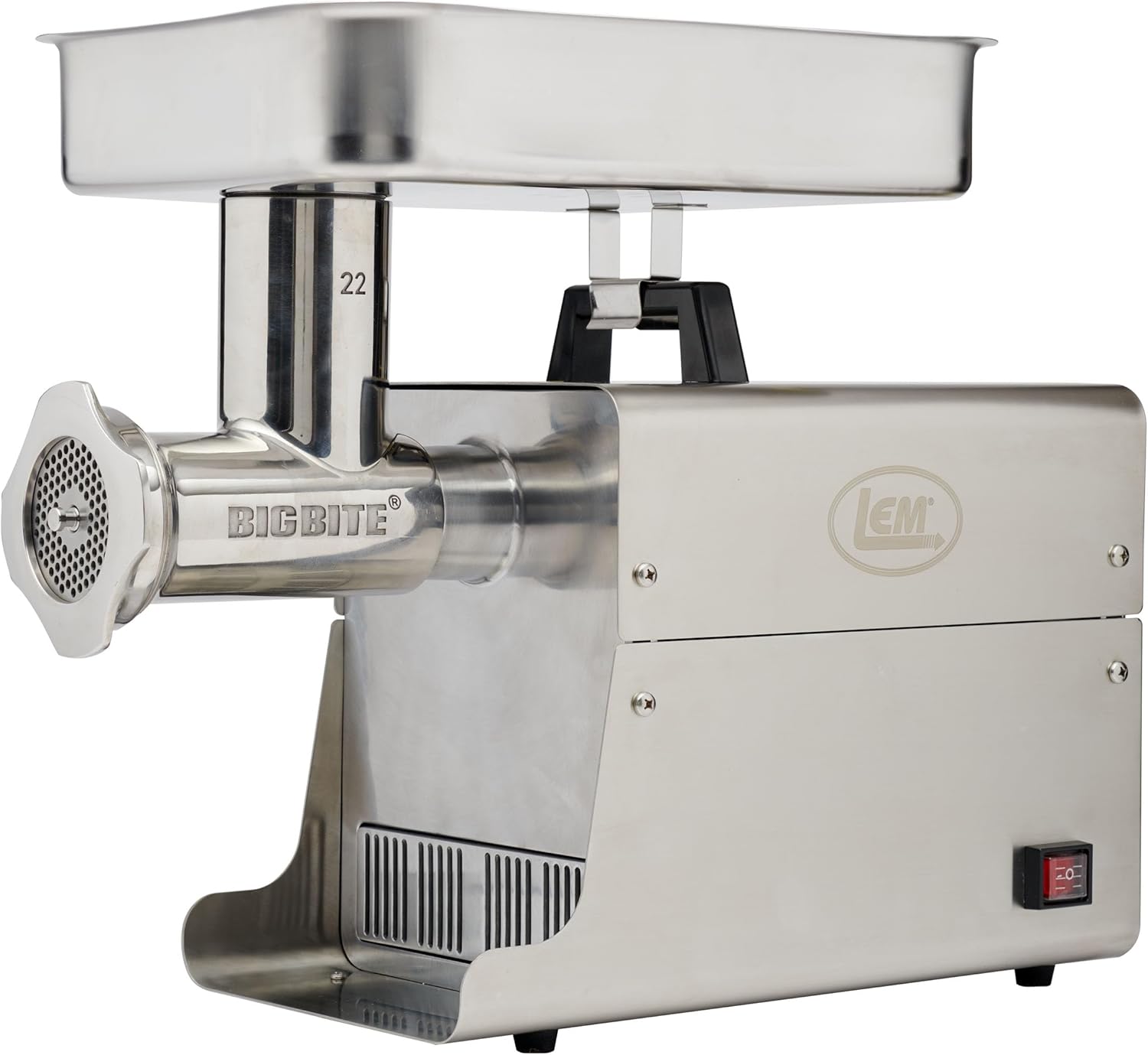
A useful second comparison because 1.0 HP • #22 head and Rated around 13 lb/min give the buyer two concrete traits to verify against this requirement.

A contrasting third option because 0.75 HP • #12 head and Rated around 11 lb/min give the buyer two concrete traits to verify against this requirement.