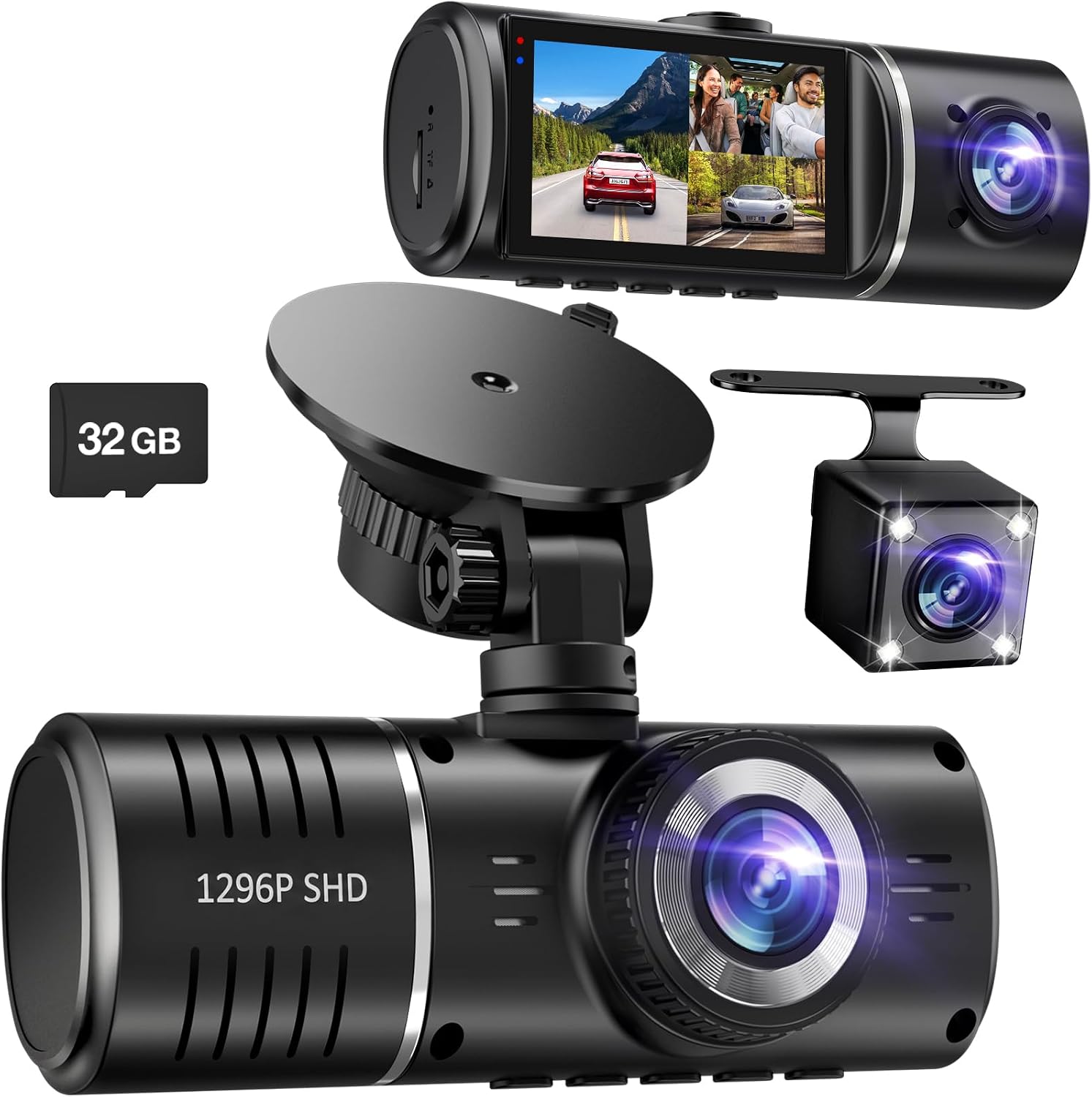
3-Channel Front / Rear / Inside Dash Cam
Our strongest starting point because its front + rear + interior defines whether it solves tracking, installation or evidence-recording needs addressed by this question.
Road-facing cameras document traffic and collisions ahead of the vehicle; dual-facing or multi-channel cameras also record the cabin. Cabin video can support coaching and claims defense but introduces stronger privacy and workforce-policy considerations.
Delivery fleets may care most about road and rear impacts, while passenger transport or high-risk operations may have a reason for interior coverage. More cameras also mean more storage and installation complexity.
Tell drivers what is recorded, how footage is used, who can access it and how long it is retained. Local law and labor agreements can affect audio and interior-video use.
For “Road-Facing vs. Dual-Facing Fleet Dashcams: Which Should You Choose?,” these three models give you concrete products to compare against the requirements above, instead of leaving the answer at theory.

Our strongest starting point because its front + rear + interior defines whether it solves tracking, installation or evidence-recording needs addressed by this question.

A useful second comparison because its 360°-style multi-view coverage defines whether it solves tracking, installation or evidence-recording needs addressed by this question.

A contrasting third option because its 4k-class front recording defines whether it solves tracking, installation or evidence-recording needs addressed by this question.